Even though we use the single word “stone,” there are actually many different types.
There are white, hard stones, warm, rough stones, soft, smooth stones, and more. Not only do they differ in appearance, but also in hardness, water absorption, durability, and ease of processing.
So why do stones have such different properties?
The main reason is “how the stone was formed.”
This time, using representative stones handled by ISHIMO as examples, we will introduce the classification of stones and their respective characteristics.
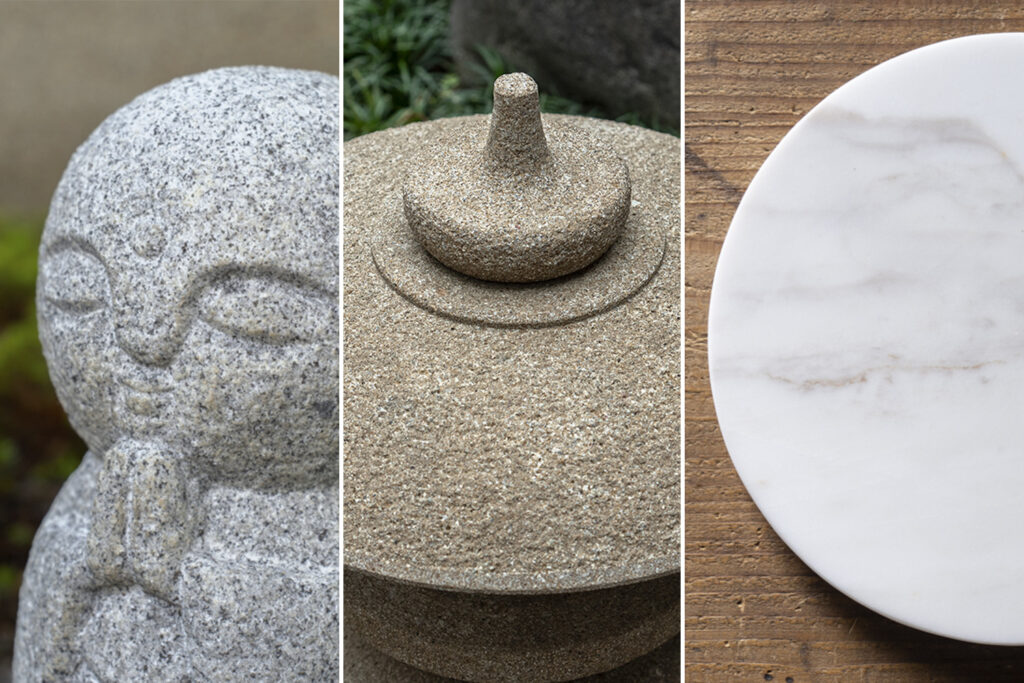
Stones can be broadly divided into three types.
Stones are broadly classified into three types based on their formation: “igneous rocks,” “sedimentary rocks,” and “metamorphic rocks.”
Igneous rocks: Stones formed when underground magma cools and solidifies.
Sedimentary rocks: Stones formed from the accumulation of sand, mud, volcanic ash, seashells, coral, etc., which solidified over a long period of time.
Metamorphic rocks: Stones whose properties have been altered by heat and pressure from the original rock.
Even though they are all called “stones,” their hardness, patterns, and textures will vary depending on the environment in which they were formed.
Granite is a “hard and durable” stone.
Granite is one of the most representative igneous rocks.
It is formed when magma cools and solidifies slowly deep underground, and minerals grow as crystals. This results in a distinctive surface pattern resembling a collection of small grains.
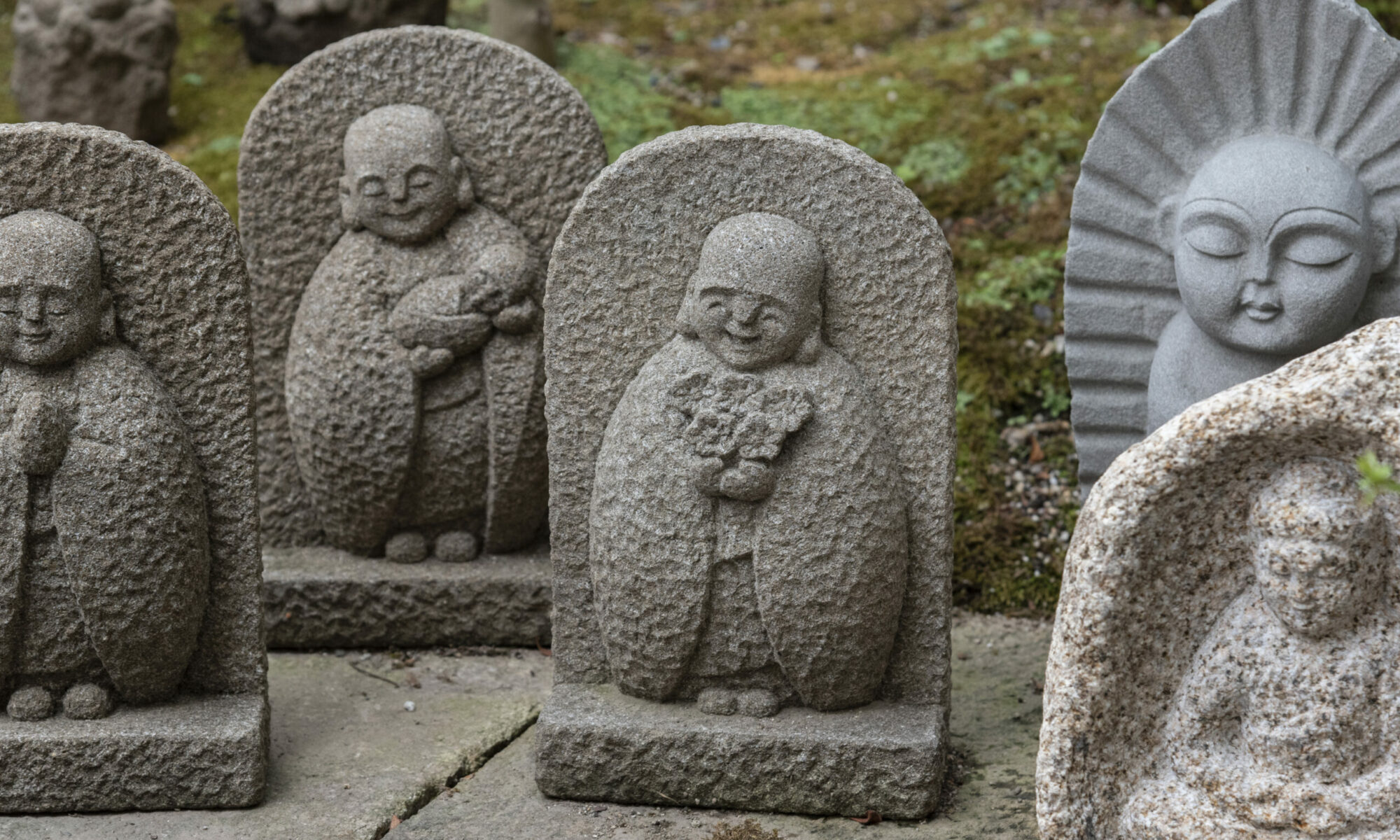
Granite, also known as “Mikageishi,” is hard and highly durable, making it widely used in building exteriors, floors, stairs, tombstones, and other places where long-term use is desired.
Among these, Makabe stone is a granite that has long been known as a representative of domestically produced Mikage.
It is characterized by its gentle, bluish hue, which deepens with age.
While resistant to weathering, Makabe stone also develops a beautiful patina with use, adding to its appeal.
It has excellent drainage, and its beautiful grain can be enjoyed for many years.
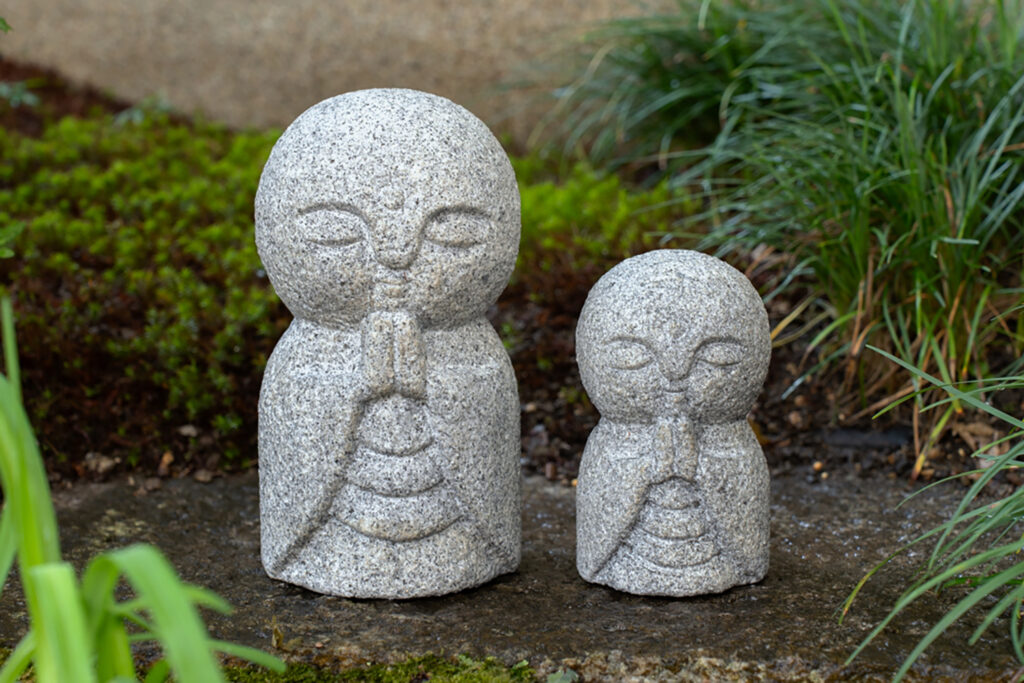
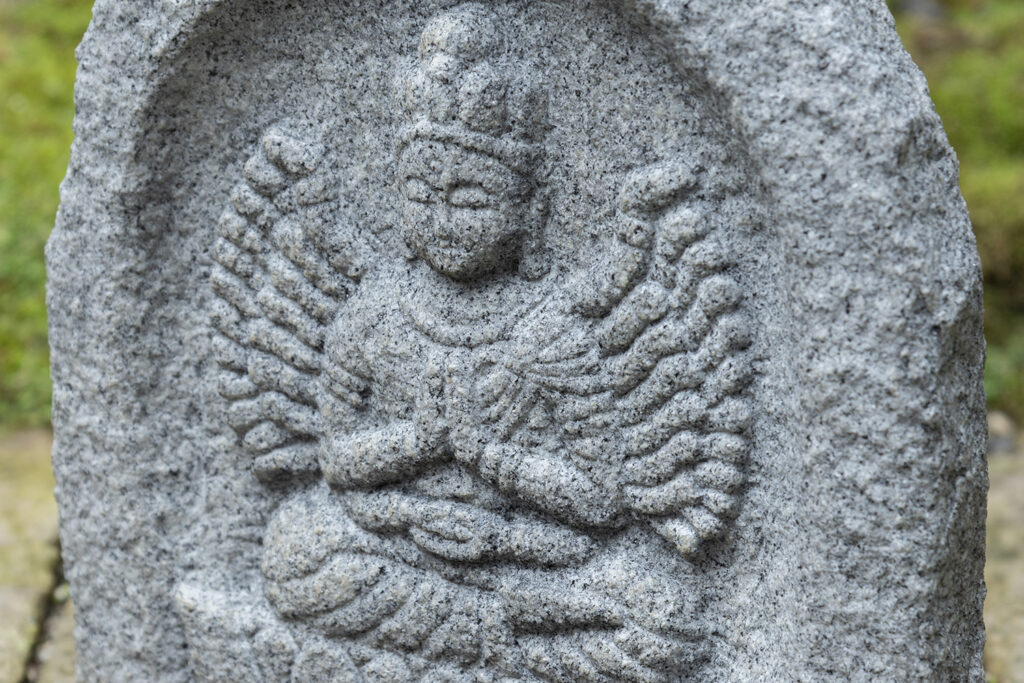
Makabe Stone Jizo (Large)
Makabe Stone Jizo
Sandstone is a rock made up of “grains of sand.”
On the other hand, sandstone (sagan) is a type of sedimentary rock.
As the name suggests, it is made up of grains like sand that have come together and hardened. Therefore, it is a stone that offers a natural and rustic texture, unlike granite.
It has high water absorption and does not easily develop the same luster as granite even when polished.
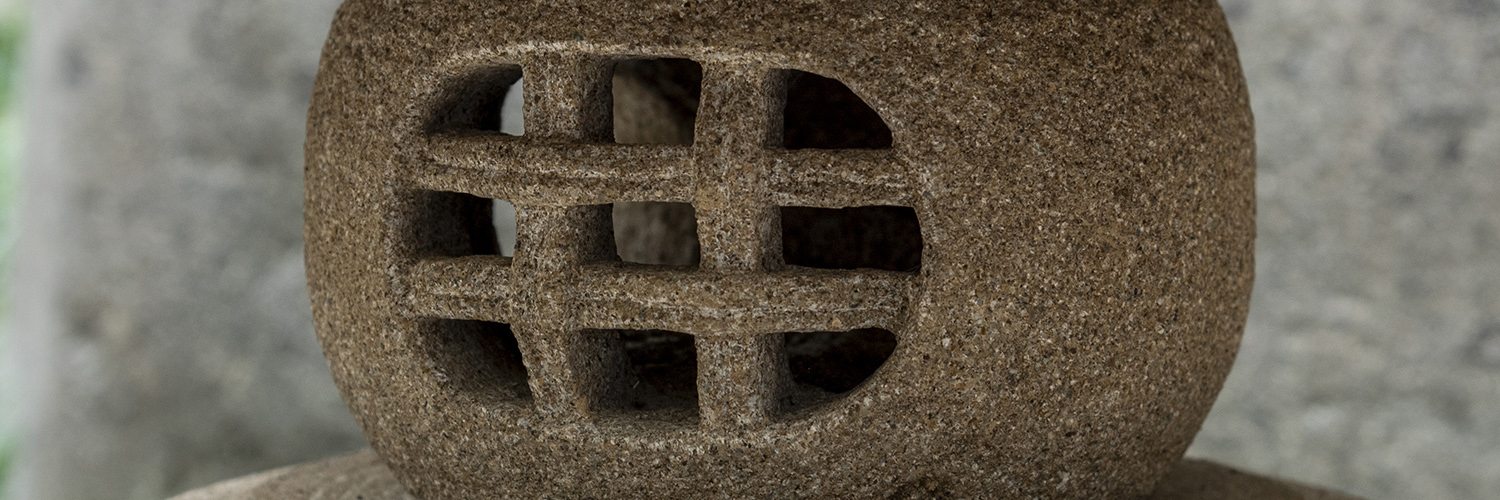
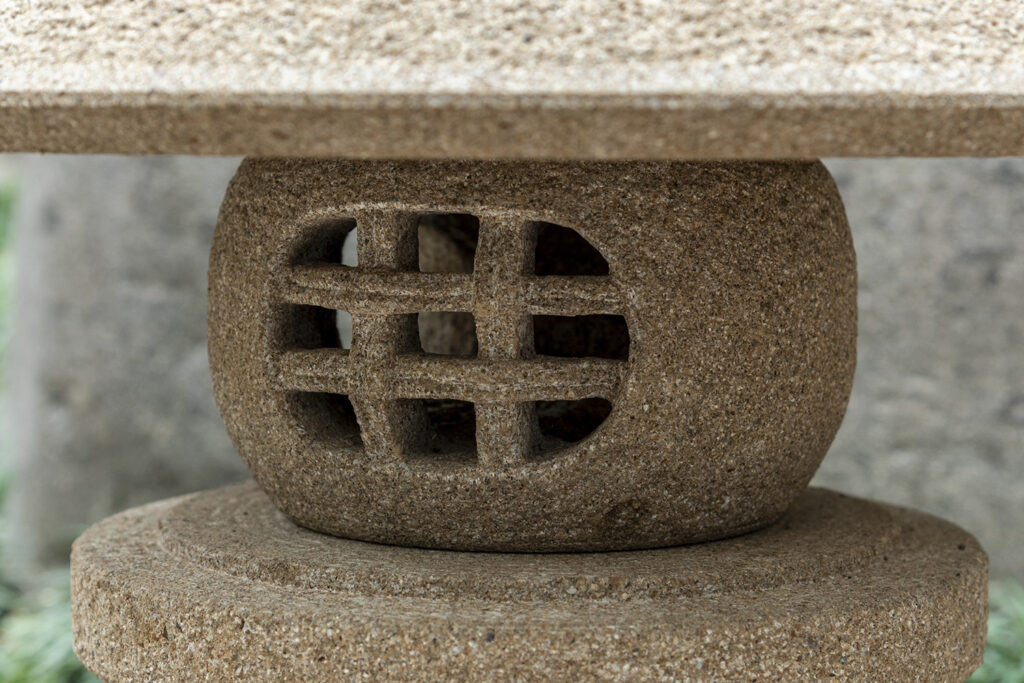
A representative example of sandstone is Kimachi stone.
When Kimachi stone is quarried, it has a bluish color, but as it gradually loses moisture, it changes to a soft, reddish-brown color.
Because it easily absorbs moisture, moss can easily grow on it depending on the location and environment, and the way it blends naturally into the environment is one of the charms of sandstone.
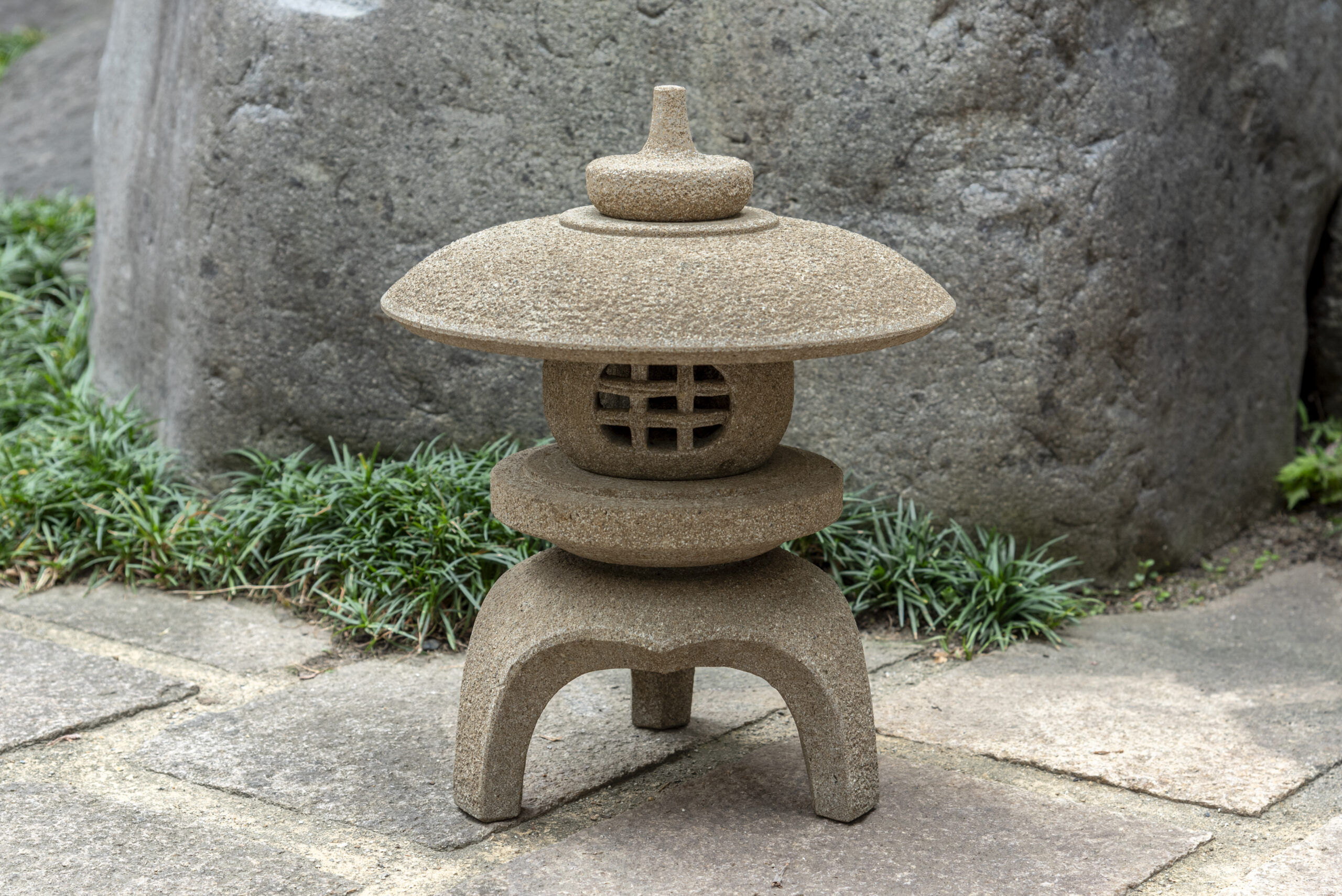
Kimachi Stone Round Yukimi lantern (1 shaku)
Tuff is a rock made from volcanic ash.
Tuff is a type of sedimentary rock.
It is formed when volcanic ash and rock fragments ejected from volcanoes accumulate and solidify.
Its main characteristic is that it is relatively soft and easy to process.
A representative example of tuff is Yame stone.
Yame stone is a sedimentary deposit formed from volcanic ash that solidified during a massive eruption of Mount Aso 70,000 years ago.
It is characterized by the presence of small yellow pumice and obsidian (natural glass formed from magma) in a lens-like pattern.
It is easy to carve and is mainly used for stone pagodas, stone sculptures, stone Buddha statues, and lanterns.
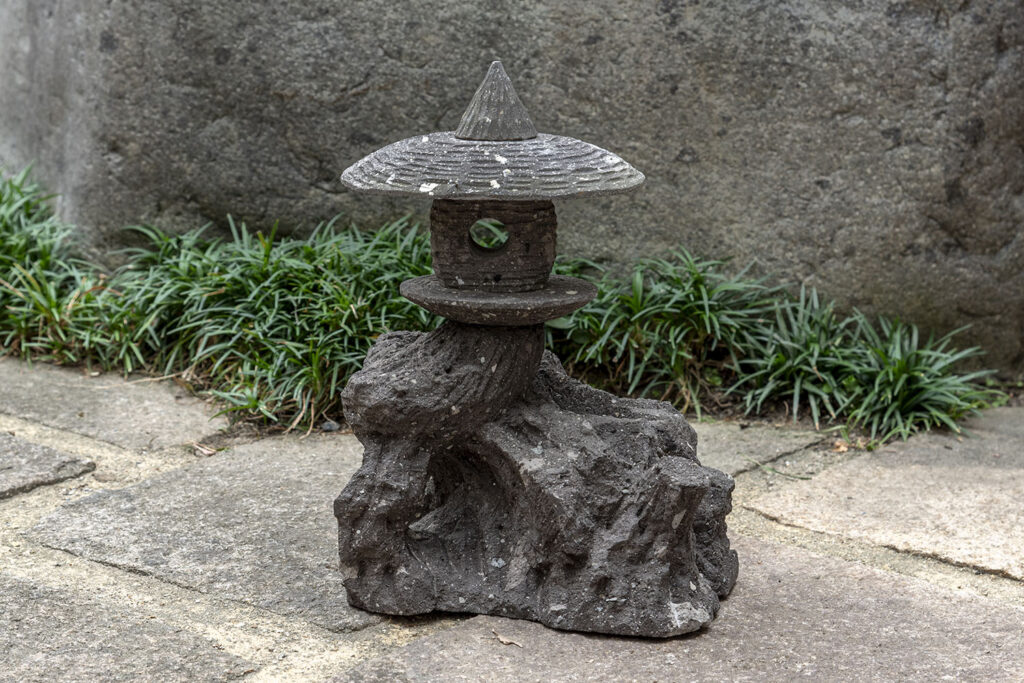
Mini natural wood-shaped stone lantern made from Yame stone
Is “marble” originally a different stone?
Sometimes the truth about marble is a little surprising.
Marble is a metamorphic rock that was originally limestone, recrystallized underground under heat and pressure.
Its beautiful colors and patterns make it widely used in interior design and decoration.
The Greek Volakas White marble handled by ISHIMO is attractive for its soft white color.
It features beautiful streaks and spots created by nature, and you can enjoy the unique appearance of each piece.
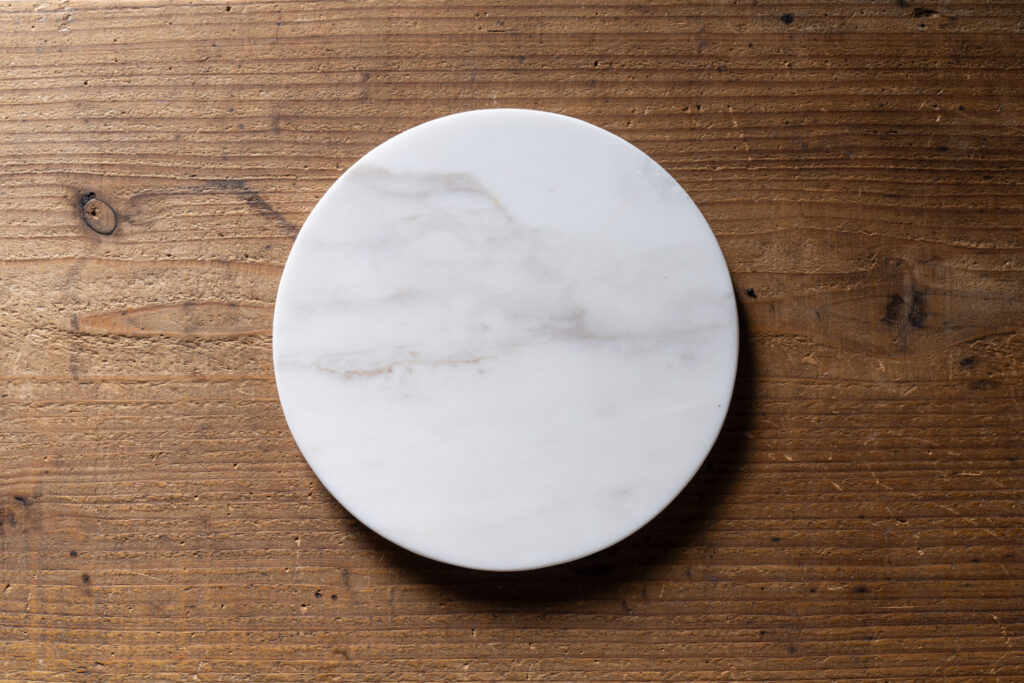
Volakas White Plate (Medium) Set of 2
Enjoying the Unique Characteristics of Each Stone
Stones possess unique characteristics not only in color and pattern, but also in hardness, water absorption, durability, and ease of processing.
Even the same type of stone can vary slightly in color and appearance depending on the environment and the passage of time.
The differences between stones reflect the place where they were born and the different environments they have experienced over long periods of time.
When choosing a stone artifact, be sure to consider not only its appearance, but also how the stone was formed and how it will change in the future.
Understanding its individuality will allow you to more deeply enjoy the pleasure of choosing a stone and appreciating its transformation over time.
Our online shop offers even more products.
We encourage you to incorporate your favorite stones into your life.