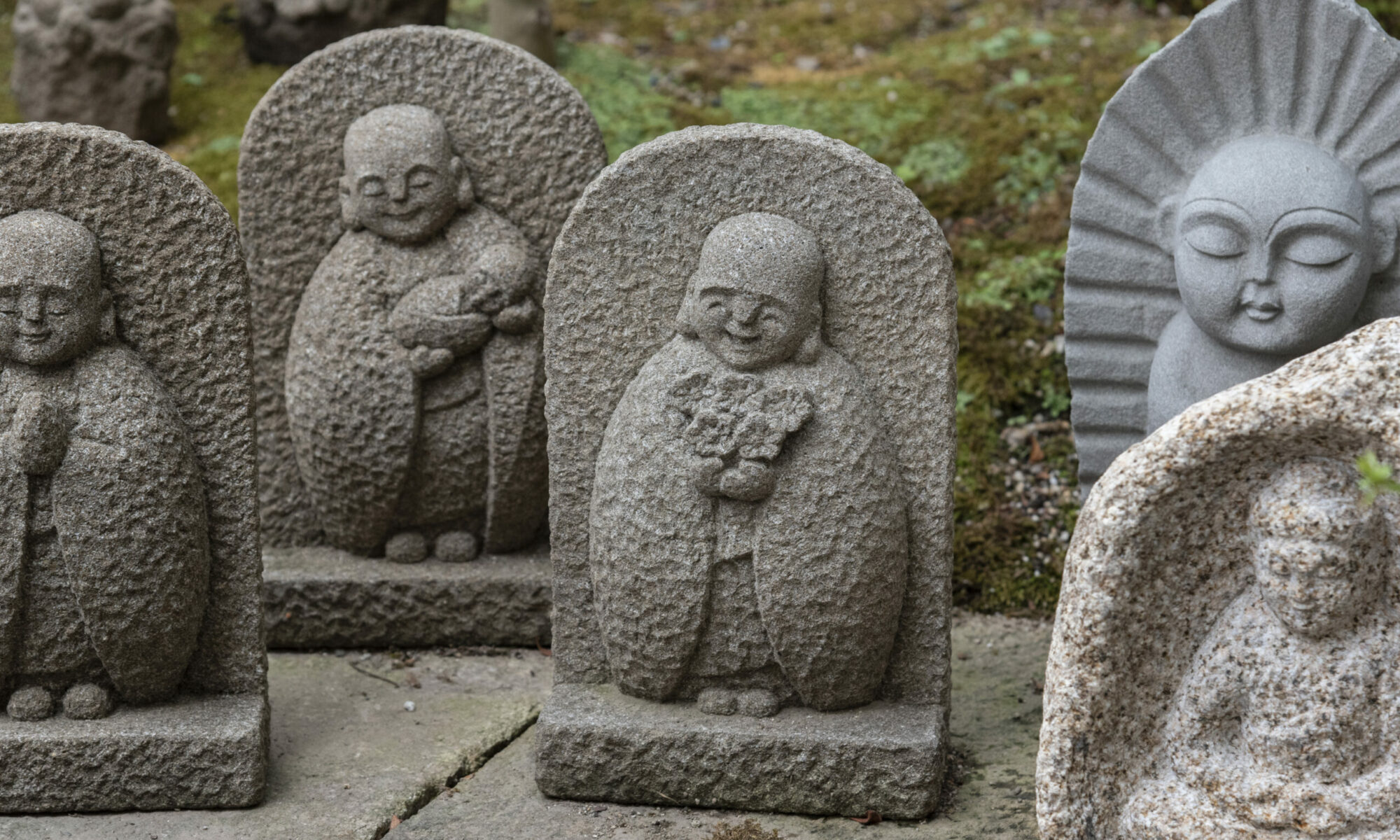

Stone lanterns can be found at temples, shrines, and in Japanese gardens throughout Japan.
Their quiet, dignified presence blends naturally into the landscape, but they are actually the product of centuries of cultural and historical development.
In this article, we will explore the origins of stone lanterns and how they evolved into a uniquely Japanese art form.
Lanterns Introduced from Baekje Along with Buddhism
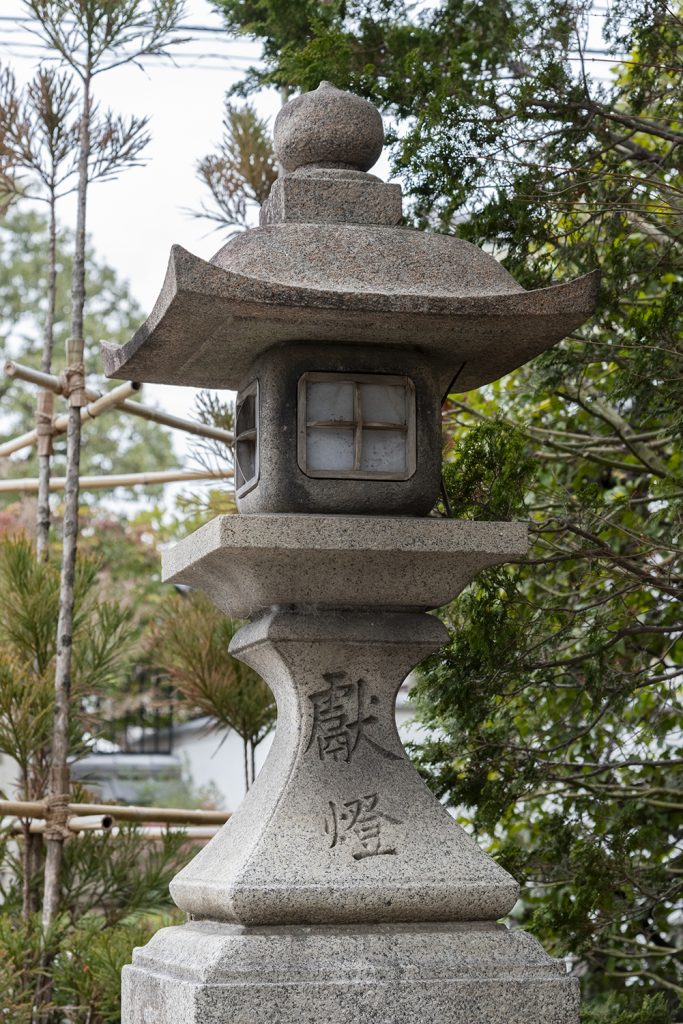
Stone lanterns are believed to have been introduced to Japan from the Kingdom of Baekje together with the arrival of Buddhism.
Originally, they were used for kentō—the offering of light before Buddhist images and altars.
Offering light to the Buddha has long been regarded as a meritorious act, and its significance is described in numerous Buddhist scriptures.
Ancient stone lanterns that closely resemble Japanese examples still exist in China and on the Korean Peninsula. Their basic structure is also remarkably similar, consisting of components such as the foundation, shaft, pedestal, light chamber, roof, and finial.
These similarities strongly suggest that stone lanterns were introduced to Japan from the Asian mainland.
At the same time, the forms and designs commonly seen today were developed within Japan and ultimately refined by Japanese craftsmen.
From a Single Lantern to Pairs—and Beyond Buddhist Temples
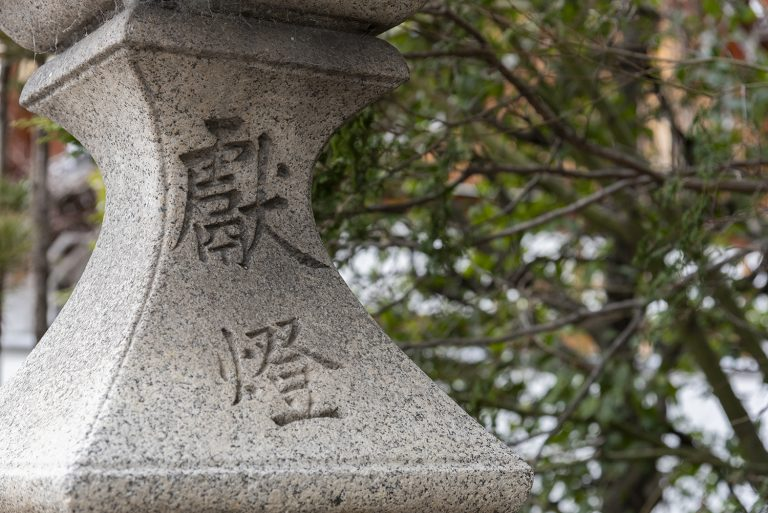
When stone lanterns were first introduced to Japan, only a single lantern was typically placed directly in front of a Buddhist hall or pagoda.
Archaeological remains from the Nara period confirm this arrangement.
As time passed, however, lanterns began to spread beyond Buddhist settings and into Shinto shrines.ssss
After the late Nara period, when the syncretism of Shinto and Buddhism became increasingly widespread, lanterns also came to be installed before Shinto deities.
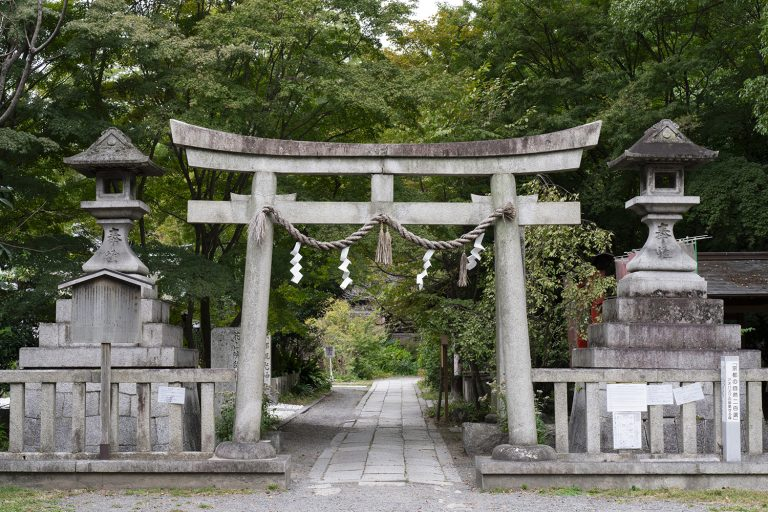
Later, the now-familiar arrangement of a symmetrical pair of lanterns emerged.
This style is believed to have appeared around the early Momoyama period, when lanterns began to play a greater role in the overall composition and design of sacred spaces.
The Flourishing of Stone Lantern Craftsmanship in the Kamakura Period
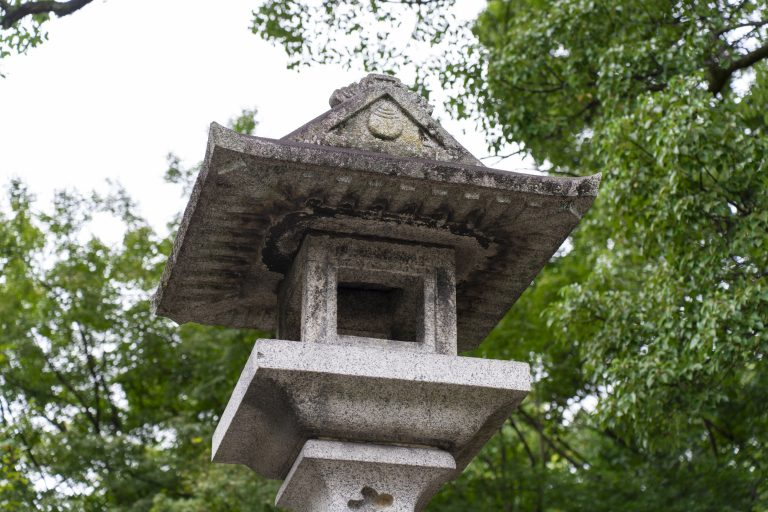
During the Kamakura period, stone sculpture—including stone lanterns—underwent significant development.
As religious devotion spread, demand for stone lanterns increased, leading to major advances in both stonemasonry techniques and production methods.
During this period:
・Hexagonal lanterns became the standard form.
・Decorative fern-shaped ornaments known as warabite were added to the roofs of lanterns.
Many of the design features that remain common today were established during this era.
Advances in stoneworking technology also made it possible to carve harder types of stone, greatly expanding the possibilities for shape and ornamentation.
The Tea Ceremony and the Rise of Garden Lanterns
Originally, stone lanterns existed primarily as offerings of light to Buddhas and deities.
Around the Momoyama period, however, their role underwent a major transformation.
The catalyst was the Japanese tea ceremony.
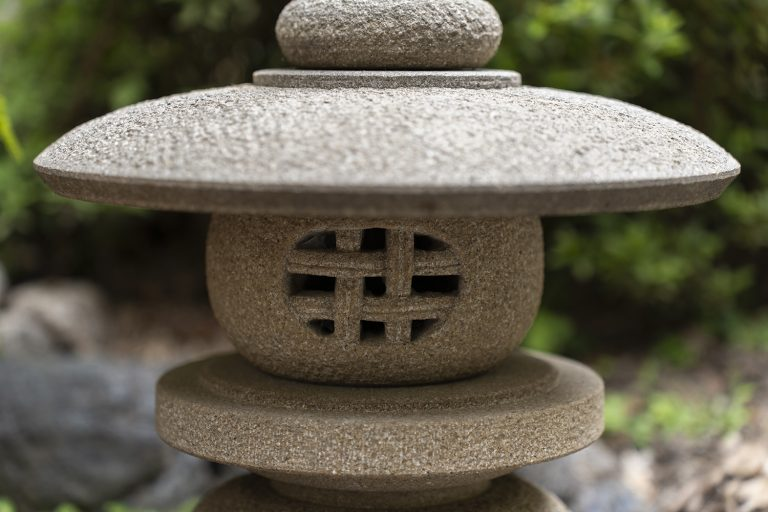
As lanterns were incorporated into tea gardens (roji), they evolved from purely religious objects into elements used to shape and enhance garden spaces.
In the early stages, existing lanterns were often relocated from temples and shrines, or assembled from combinations of preexisting stone objects.
Eventually, lanterns specifically designed for gardens were created, allowing stone lanterns to become part of everyday life beyond religious settings.
From the Edo Period into Daily Life
During the Edo period, the uses of stone lanterns expanded even further.
They appeared not only in gardens but also in practical settings, including:
・Tsuji-dōrō (roadside lanterns), erected along streets and intersections.
・Tōdai-dōrō (lighthouse lanterns), associated with prayers for the safety of boats and maritime travel.
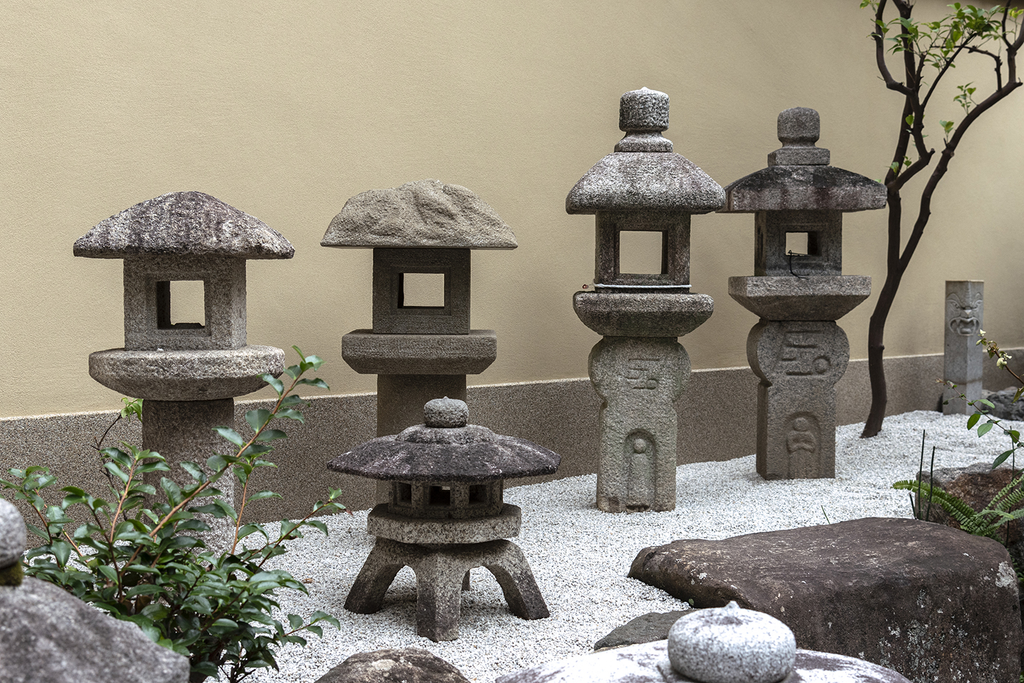
New styles also emerged, including Oribe lanterns and Yukimi lanterns, reflecting increasingly creative and diverse design concepts.
In this way, stone lanterns came to serve religious, aesthetic, and practical purposes simultaneously, a legacy that continues to the present day.
Conclusion
Stone lanterns:
・Were introduced from Baekje along with Buddhism.
・Began as lanterns for offering light before the Buddha.
・Expanded into shrines and gardens.
・Evolved through Japanese craftsmanship, technology, and aesthetics.
They are a cultural tradition that has been handed down through the centuries, adapting both its form and function over time.
The next time you see a stone lantern, it may appear a little different once you understand the history behind it.
Why was it placed there?
What meaning did it originally hold?
Looking at stone lanterns through these questions can offer a deeper appreciation of both the lanterns themselves and the landscapes they inhabit.
Our online shop offers even more products.
I highly recommend incorporating small stone objects into your daily life.