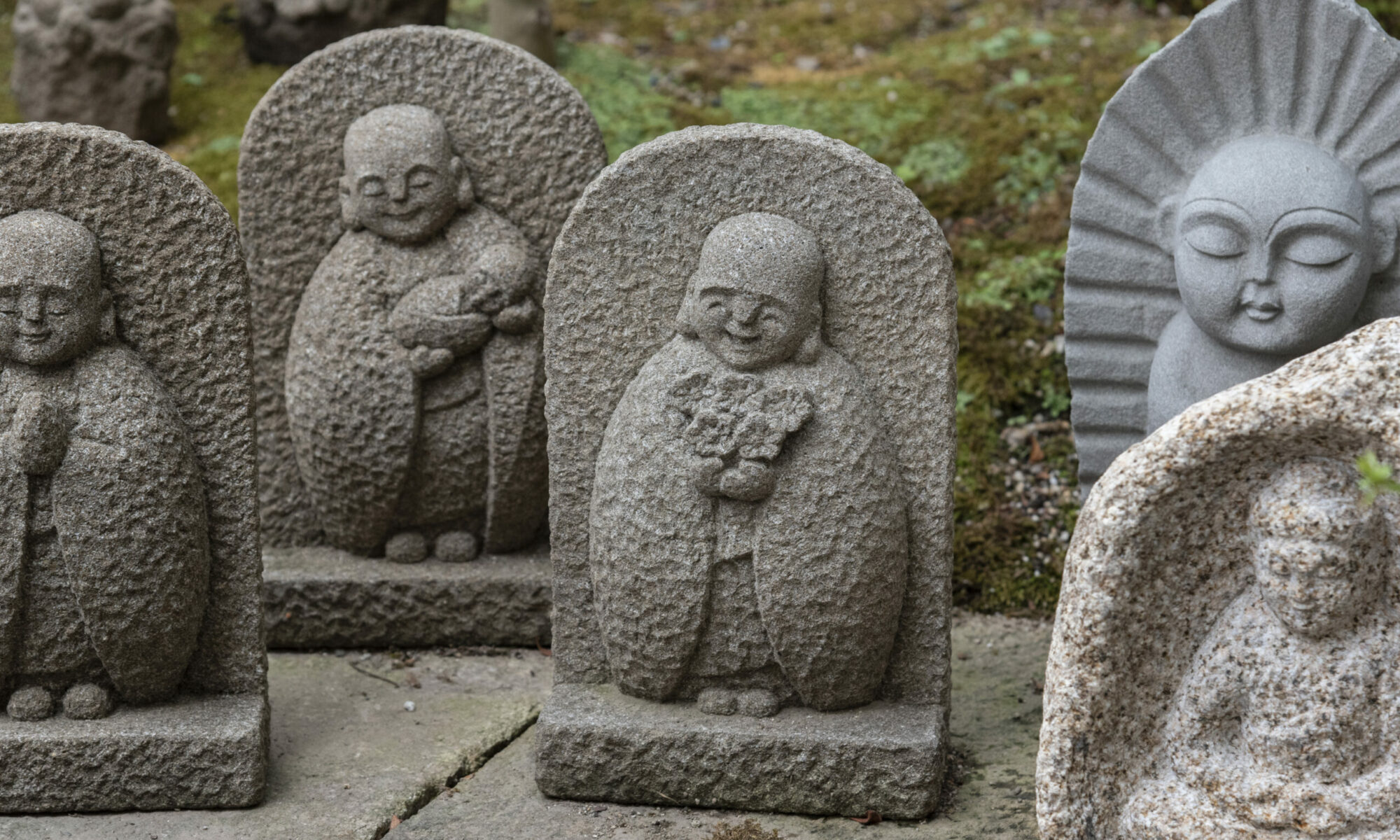
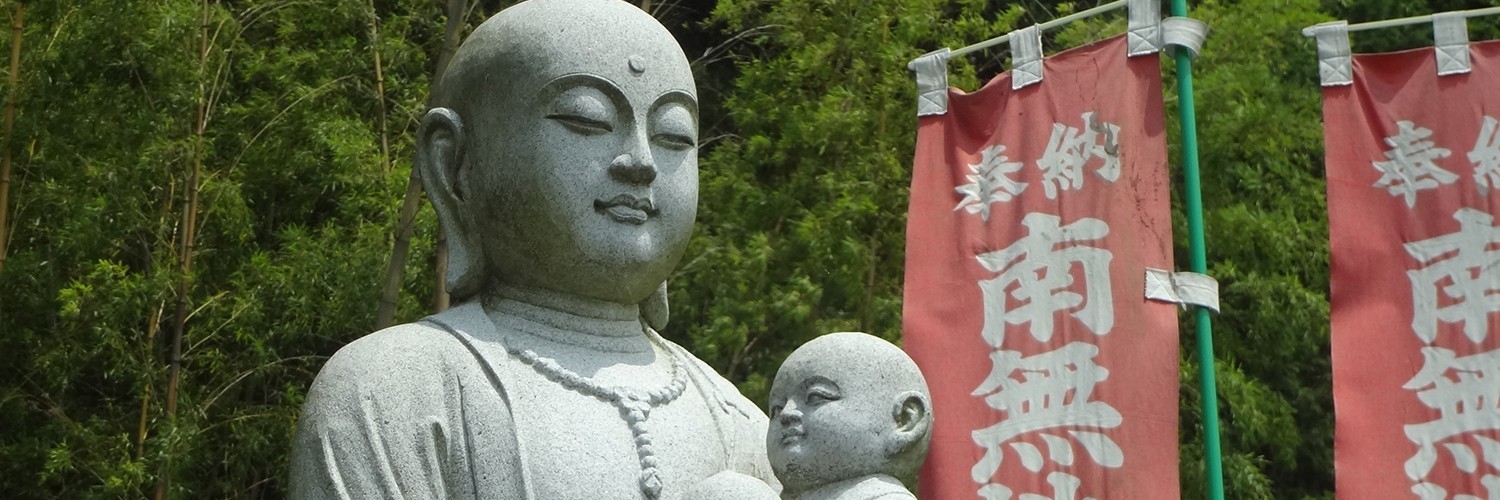
Jizo are often seen along roadsides and within temple grounds.
Many of them seem to wear a gentle, compassionate expression.
In particular, children and Jizo are believed to share a deep connection, and these statues have long been carefully enshrined within local communities.
This article offers a simple overview of the background behind that relationship.
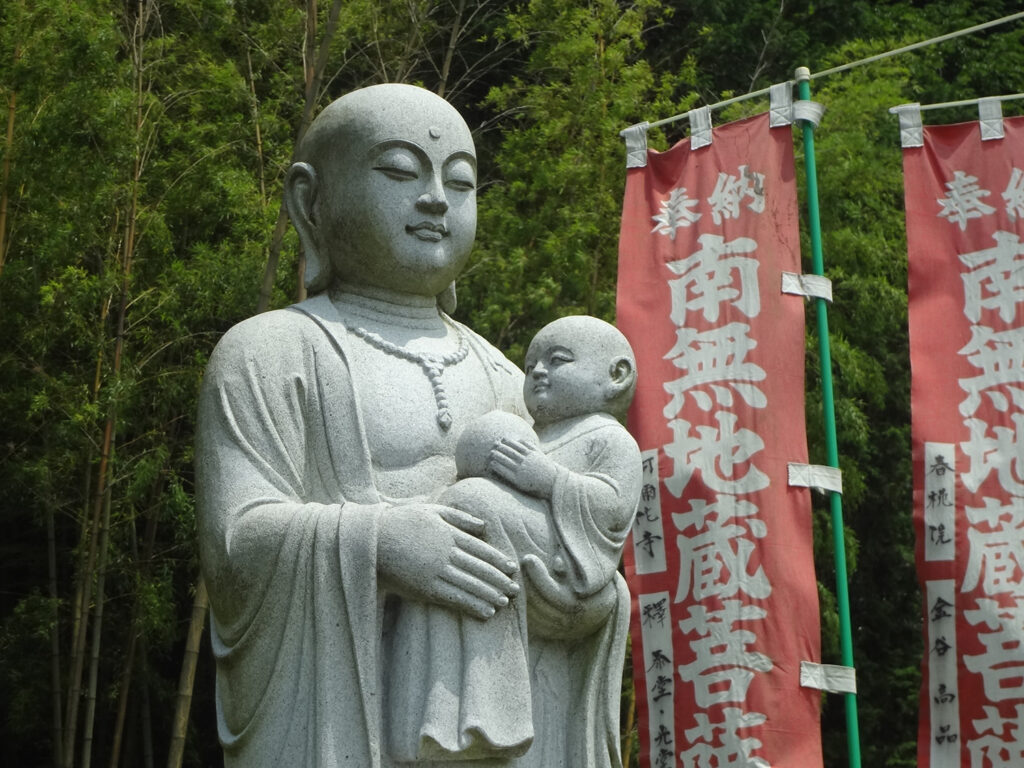
Why Are Children Connected with Jizo?
Jizo (formally known as Jizo Bosatsu) is regarded in Buddhism as a being who travels through the Six Realms(hell, hungry ghosts, animals, asura, humans, and heavenly beings)
to save all living beings.
Among those beings, Jizo has been thought to have a particularly close connection with children who died at a young age.
In the Buddhist worldview, deceased children are said to stack stones at “Sai no Kawara,” the riverbank near the boundary to the afterlife.
This image is also depicted in a traditional Buddhist hymn called Sai no Kawara Jizo Wasan.
Within that hymn appears Jizo Bosatsu, who watches over the children like a parent in the afterlife.
Through beliefs such as these, Jizo came to be widely accepted as a guardian figure for children.
The Spread of Jizo as a Protector of Children
Faith in Jizo was introduced to Japan during the Nara period, and from the late Heian period onward, it gradually spread among ordinary people.
One reason behind this was the growing influence of the idea of mappō — the “Age of the Decline of the Dharma,” when Buddhist teachings were believed to lose their power.
People became deeply anxious about living in what they saw as an age without true Buddhist salvation.In this context, Jizo Bosatsu came to be trusted as a figure who could save people regardless of time or circumstance, and especially as a protector of those in vulnerable positions.
From this tradition emerged many forms of Jizo worship related to children, including:
- Koyasu Jizo (for safe childbirth and children’s healthy growth)
- Kosodate Jizo (for raising children)
- Yonaki Jizo (for children who cry at night)
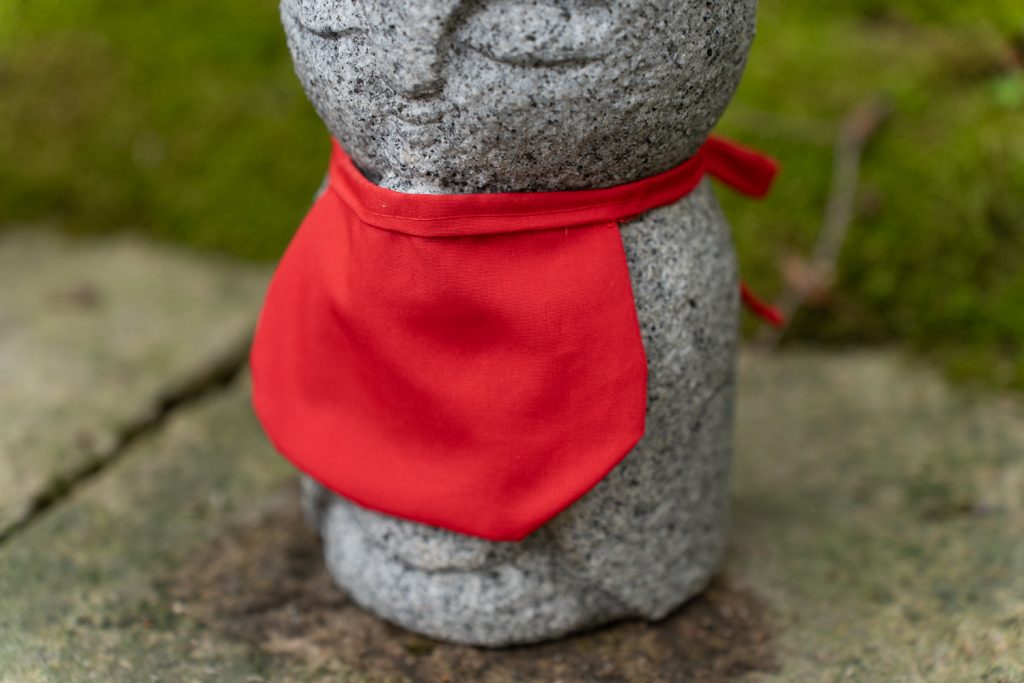
The red bibs often seen on Jizo statues are also thought to originate from these child-related beliefs and customs.
Kyoto and Jizo
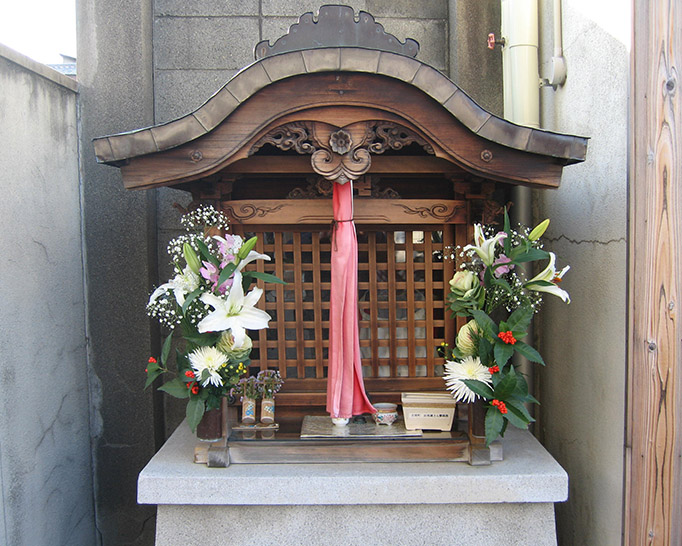
In Kyoto, a traditional event called Jizo-bon is still held today, and many neighborhoods continue the custom of honoring local Jizo statues.
This festival centers around children and preserves the idea that Jizo watches over the children of the community.
ISHIMO’s Jizo Statues
Among the statues handled by ISHIMO are Jizo figures holding children
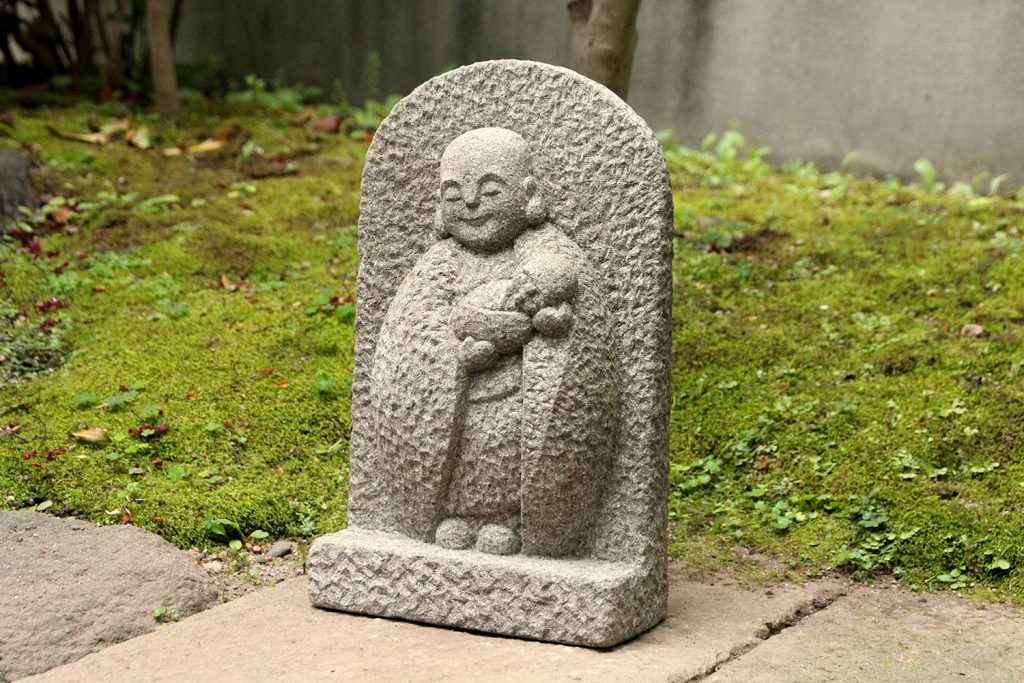
Relief-Style Jizo Statue Holding a Child, Made from Kimachi Stone
This relief-style Jizo statue is crafted from Kimachi stone produced in Shimane Prefecture.Each piece is hand-carved by a craftsman from Shimane and is entirely one of a kind.
The statue’s gentle and peaceful expression seems to slow the passage of time itself.
The online shop also offers many other varieties of Jizo statues. Please take a look.
We also accept custom-made orders. Estimates are free, so please feel free to contact us.