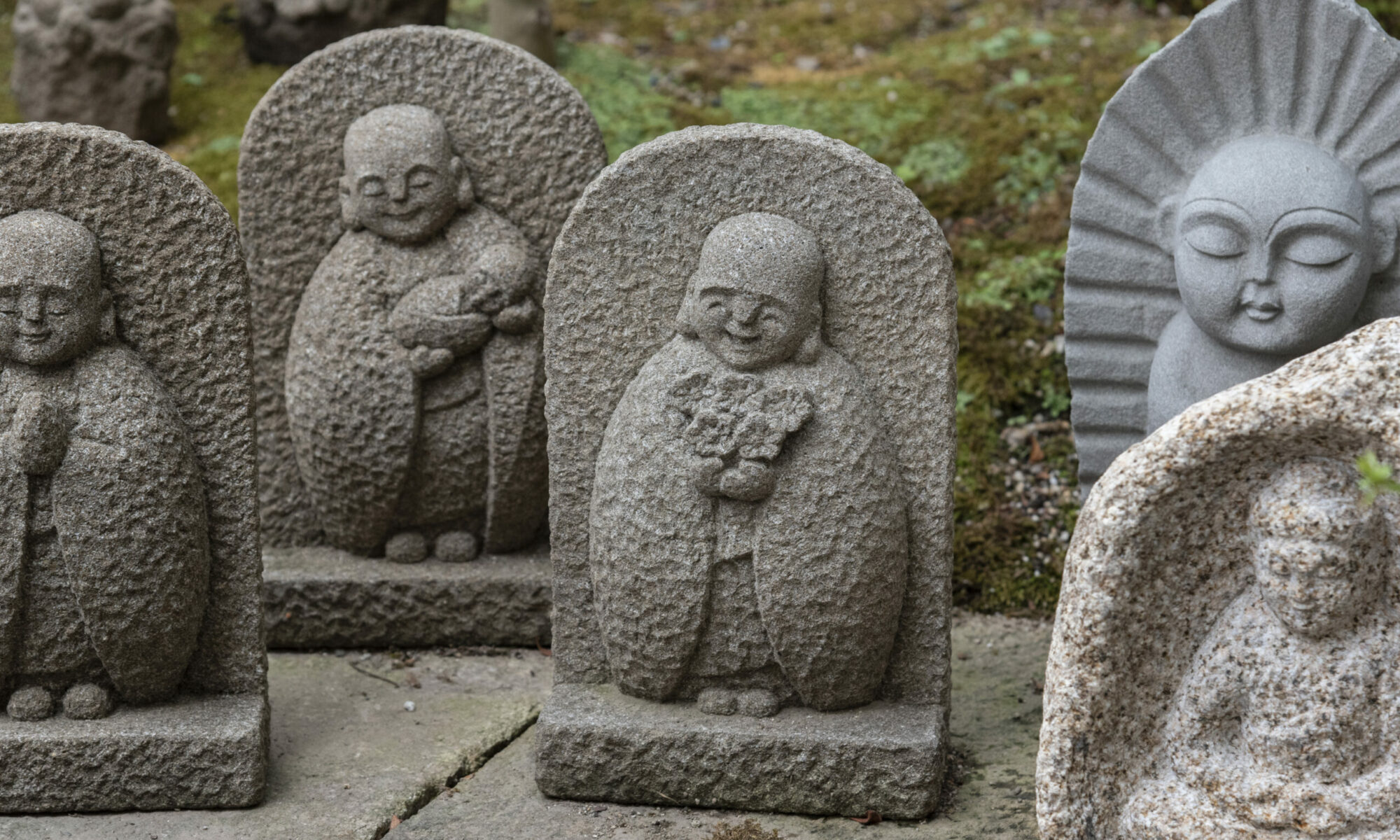
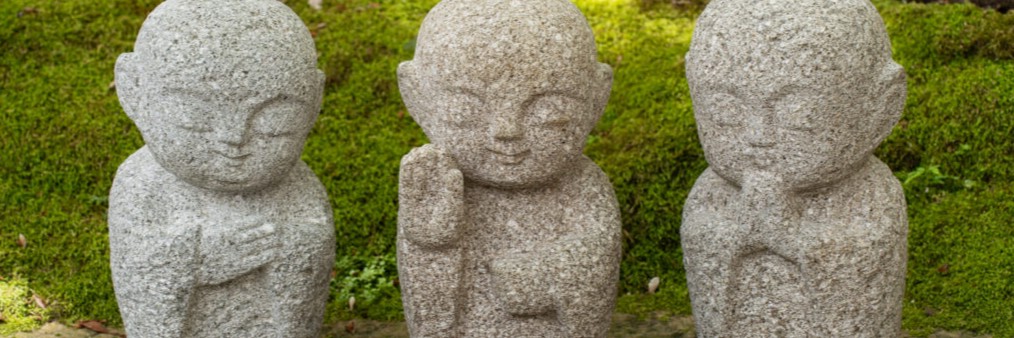
You may have noticed Jizō (地蔵) standing quietly along roadsides or within temple grounds.
There is something familiar and comforting about them, as if they have always been there, watching over people through the ages.
Among Japan’s many stone Buddhist statues, Jizō are especially common.
Yet many people may not know exactly what kind of Buddhist figure they represent.
In this article, we will gently explore the basics of Jizō Bodhisattva.
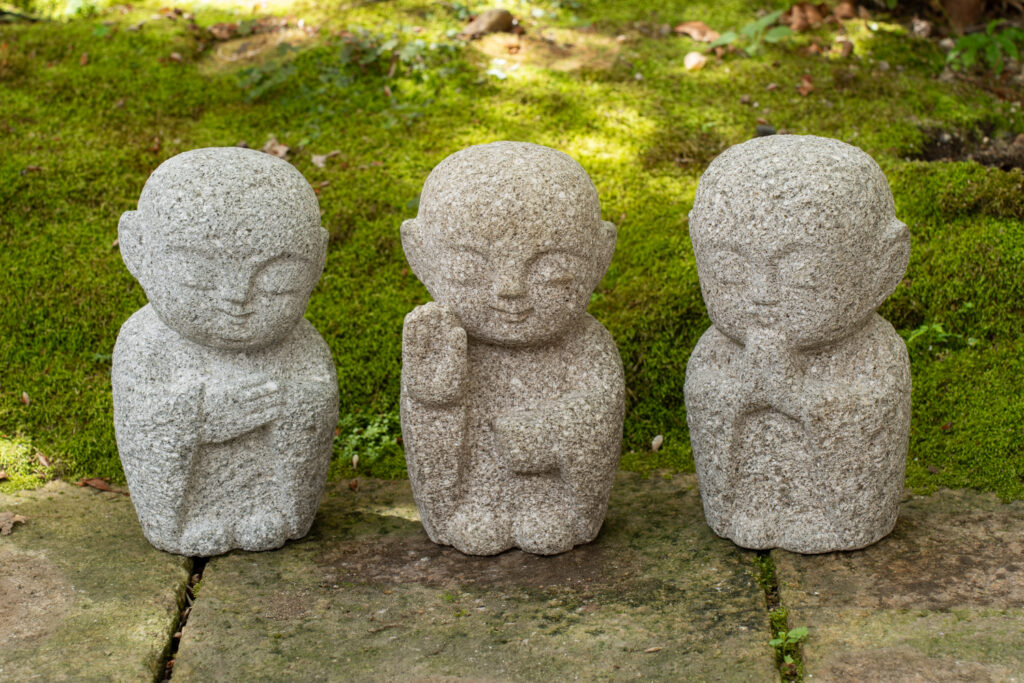
What Is Jizō Bodhisattva?
Jizō is the familiar Japanese name for Jizō Bosatsu (地蔵菩薩 / Kṣitigarbha〔クシティガルバ〕).
The name comes from the Sanskrit word Kṣitigarbha, which means:
“a being who embraces everything like the earth and stores up virtue.”
In Buddhism, it is believed that after Shakyamuni Buddha (釈迦如来) entered nirvana (入滅), there would be a long period before Miroku Bosatsu (弥勒菩薩) appears in this world.
During that time, the world is said to be in an age without a Buddha, called mubutsu no jidai (無仏の時代).
This period is traditionally said to last 5.67 billion years.
Jizō Bodhisattva is believed to continue saving and guiding all living beings throughout this vast span of time.
The Role of Jizō Bodhisattva and the Spread of Jizō Faith
Jizō Bodhisattva is believed to travel through the Six Realms (Rokudō/六道) in order to save all sentient beings.
These six realms are:
- Hell (Jigoku/地獄)
- Hungry Ghosts (Gaki/餓鬼)
- Animals (Chikushō/畜生)
- Ashura (Shura/修羅)
- Humans (Ningen/人間)
- Heavenly Beings (Tenjō/天上)
Especially during the late Heian period, belief in Jizō spread widely alongside the growing influence of mappō shisō (末法思想/the belief that the Buddhist teachings were entering a degenerate age).
As anxiety grew over who would save people in such troubled times, devotion to Jizō became increasingly important.
From the Kamakura period onward, groups of six Jizō statues known as Roku Jizō (六地蔵/Six Jizō Guardians) began appearing along roadsides and at cemetery entrances, becoming deeply rooted in everyday folk belief.trances, becoming deeply rooted in everyday folk belief.
What Does Ojizō-sama Look Like?
One distinctive feature of Jizō Bodhisattva is that he is depicted in the appearance of a BOne distinctive feature of Jizō Bodhisattva is that he is depicted in the appearance of a Buddhist monk.
Typical characteristics include:
- A shaved head
- Simple monk’s robes (kesa/袈裟)
- Very little ornamentation
While many other bodhisattvas are portrayed wearing elaborate jewelry and decorations, Jizō appears in a humble and approachable form.
This appearance symbolizes a being who personally travels anywhere necessary in order to stay close to and help people.
The Meaning of the Objects Held by Jizō
Some statues of Jizō are shown with their hands together in prayer.
However, many are depicted holding a shakujō (錫杖/a Buddhist monk’s staff) in the right hand and a hōju (宝珠/wish-fulfilling jewel) in the left.
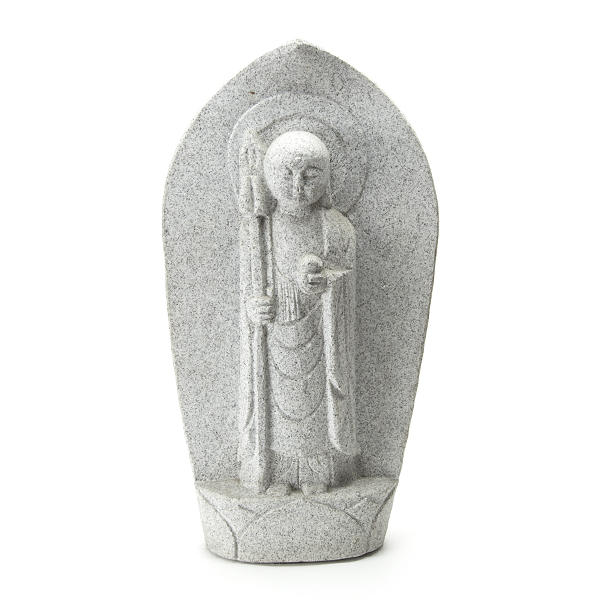
The shakujō is a staff traditionally carried by Buddhist monks during their travels and training.
It symbolizes Jizō’s journey to reach and help those who are suffering.
The hōju is a sacred jewel believed to grant people’s wishes.
Together, these ritual objects (jibutsu/持物) represent Jizō Bodhisattva traveling throughout the world to save and support all beings.
Jizō at ISHIMO
Among the Ojizō-sama statues offered by ISHIMO, there are also traditional designs holding a hōju and shakujō.
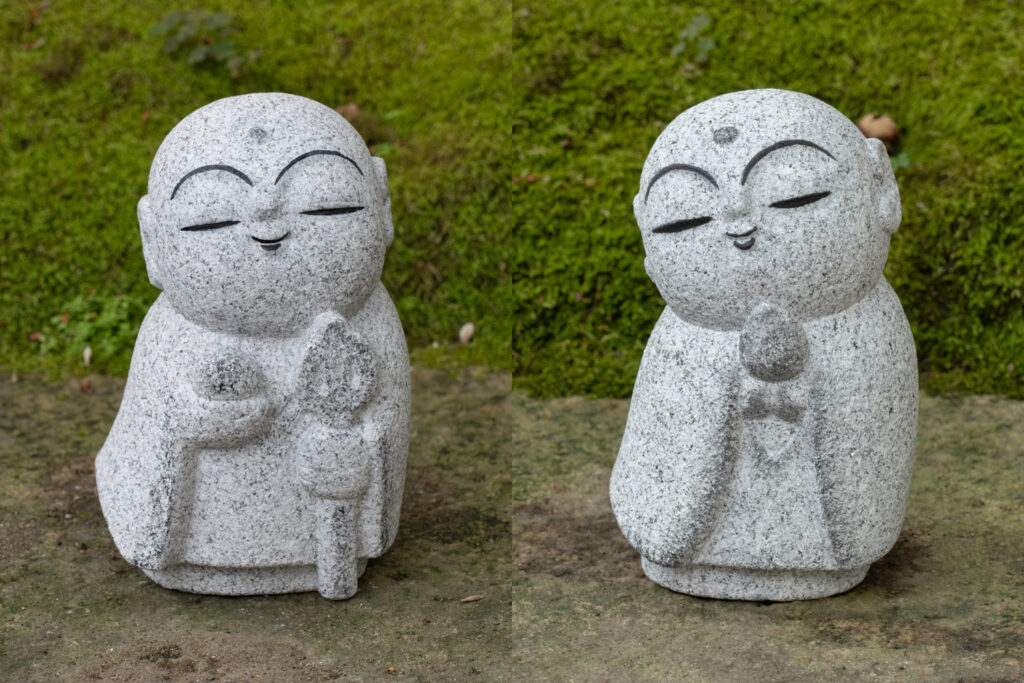
Hanazawa Stone Jizo (shakujō))and Hanazawa Stone Jizo (hōju)
These are hand-carved Jizo statues by a stone craftsman active in Okazaki City, Aichi Prefecture.
For those of you leading busy lives, take some time to unwind.
By having these gentle and warm Jizo statues accompany you in your daily life, you can enjoy richer days.
Our online shop offers a variety of other Jizo statues. Please take a look.
We also accept custom orders. Estimates are free, so please feel free to contact us!