A Simple Guide to How Stone Buddhas Changed Through the Ages
How have Japan’s sekibutsu evolved over time?
The stone Buddhas we casually encounter along roadsides or at temples today have actually been passed down across many centuries, gradually changing in form, meaning, and role within society.
Here, we introduce the history of sekibutsu in Japan — from the arrival of Buddhism to the present day.

Asuka and Nara Periods: The Beginning of Sekibutsu
Sekibutsu are believed to have first appeared in Japan not long after Buddhism was introduced.
Among the oldest surviving examples are the Stone Triad at Seki-ji Temple in Nara Prefecture and the stone Buddha of Kohōkaji Temple in Hyogo Prefecture.
Both date to the Hakuhō period (late 7th century) and show strong stylistic influences from the Asian continent.
Heian Period: The Spread of Mappō Thought and Pure Land Belief
Few sekibutsu from the early Heian period have been confirmed.
One reason may be that wooden Buddhist statues placed inside temple halls were more common during this time.
However, in the later Heian period, stone Buddhas gradually became more widespread alongside the growth of Esoteric Buddhism.
Stone statues featuring carved Sanskrit characters and Four-Directional Buddhas also began to appear.
As belief in mappō — the “Age of the Decline of the Dharma”(末法思想) — spread, along with Pure Land Buddhism, stone statues centered on Amida Nyorai also became increasingly common.
Another characteristic of this era was the extensive use of soft tuff stone, which was easier to carve.
Large-scale magaibutsu(磨崖仏) (Buddhist images carved directly into rock surfaces) were especially created in the Kansai region during this period.
Kamakura Period: The Golden Age of Sekibutsu
The Kamakura period marked a major development in sekibutsu craftsmanship.
During the reconstruction of Tōdai-ji and other major projects, new stoneworking techniques were introduced from Song-dynasty China.
These techniques made it possible to carve hard granite — previously very difficult to process.
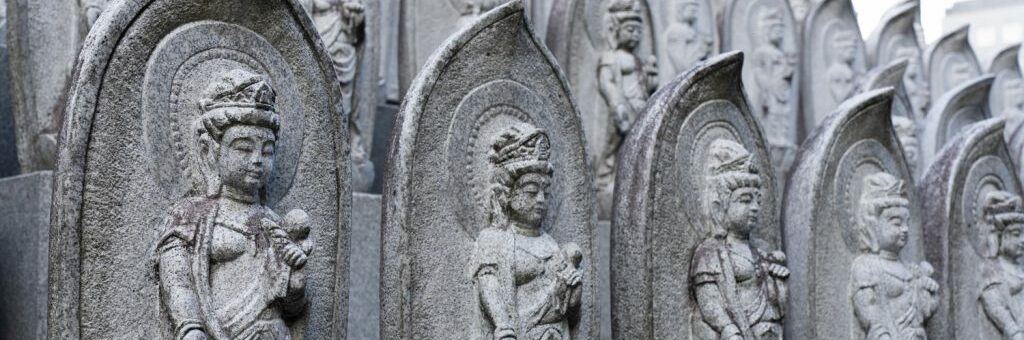
As a result, a wide variety of stone monuments came to be created, including finely carved sekibutsu, free-standing stone statues, gorintō (five-ring pagodas), and hōkyōintō (memorial pagodas).
Another important shift was that the commissioning of sekibutsu expanded beyond aristocrats and elites to include samurai and ordinary people.
Because of this, stone Buddhas gradually became smaller and more closely connected to daily life.
Muromachi and Sengoku Periods: Sekibutsu in Everyday Life
From the Muromachi period onward, Buddhism became more deeply rooted among ordinary people.
Sekibutsu were no longer found only inside temples, but also appeared along roadsides and near cemetery entrances.
This spread was also influenced by the activities of traveling Buddhist fundraisers and monks known as kanjin hijiri(勧進聖).
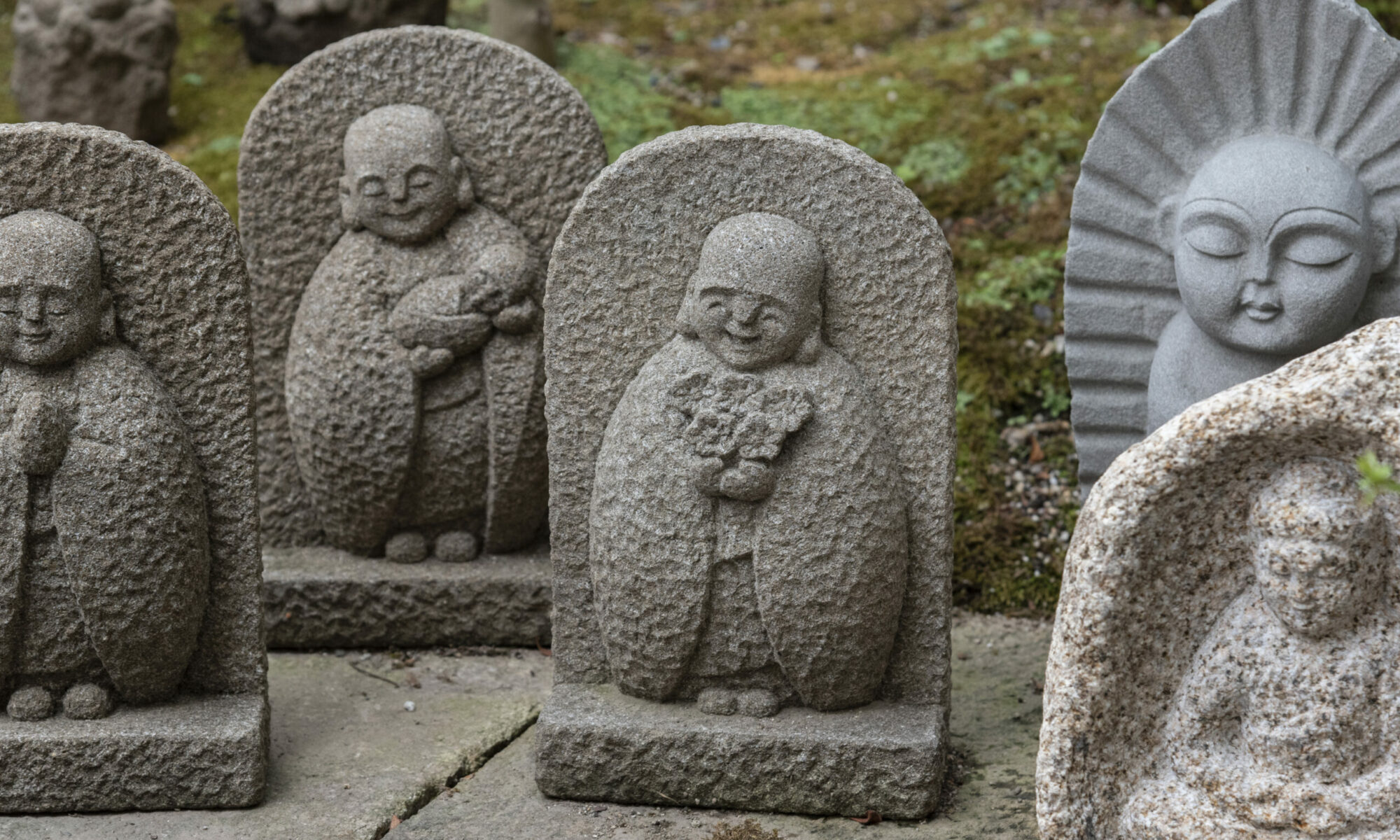
Faith in Jizo Bosatsu became especially widespread, and roadside stone Jizo statues came to serve as comforting presences within daily life.
During this period, sekibutsu gradually took on simpler and more approachable expressions.
This era also saw growing demand for stone materials used in castle construction, and stoneworkers are thought to have contributed to castle building as well.
Edo Period: Diversity of Faith and Regional Characteristics
With the social stability of the Edo period came greater diversity in religious belief, and the variety of sekibutsu expanded even further.
Sekibutsu associated with worldly blessings, such as Migawari Jizo and Dōsojin(道祖神), also came to be created throughout Japan.
Stoneworking techniques spread nationwide, and each region developed distinctive sekibutsu using local stone materials.
At the same time, stone processing also grew into a major industry, and many stoneworkers became involved in gravestone production.
From the Meiji Period to the Present
During the Meiji period, the anti-Buddhist movement known as haibutsu kishaku placed many sekibutsu at risk of destruction.
Records remain in Kyoto of stone Buddhas being toppled or thrown into ponds.
At the same time, however, many were protected and preserved by deeply devoted local people.
Today, sekibutsu are valued not only as objects of faith, but also as important examples of Japanese spiritual culture and stone art.
Even now, new sekibutsu continue to be created — preserving traditional forms while adapting to contemporary lifestyles and memorial practices.
The Work of ISHIMO
At ISHIMO, we have worked with stone in Kyoto for nearly 300 years.
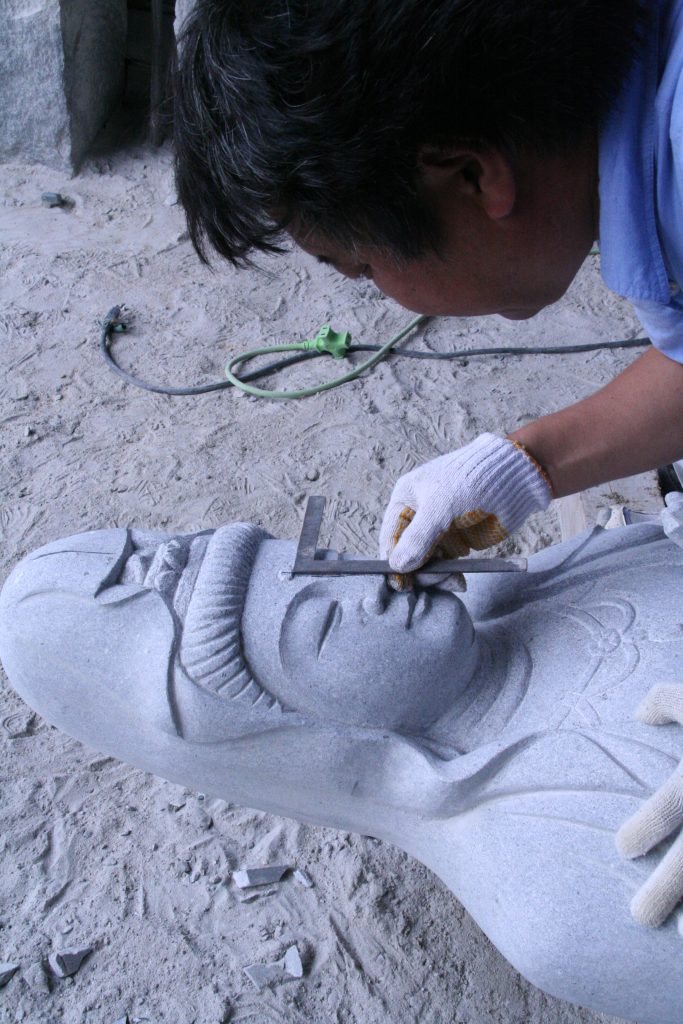
While inheriting the techniques and prayers carved into stone across many generations, we continue not only to create sekibutsu, but also to restore and preserve them.
So that these stone Buddhas may continue to exist alongside people’s thoughts and prayers into the future, we approach each one with great care.
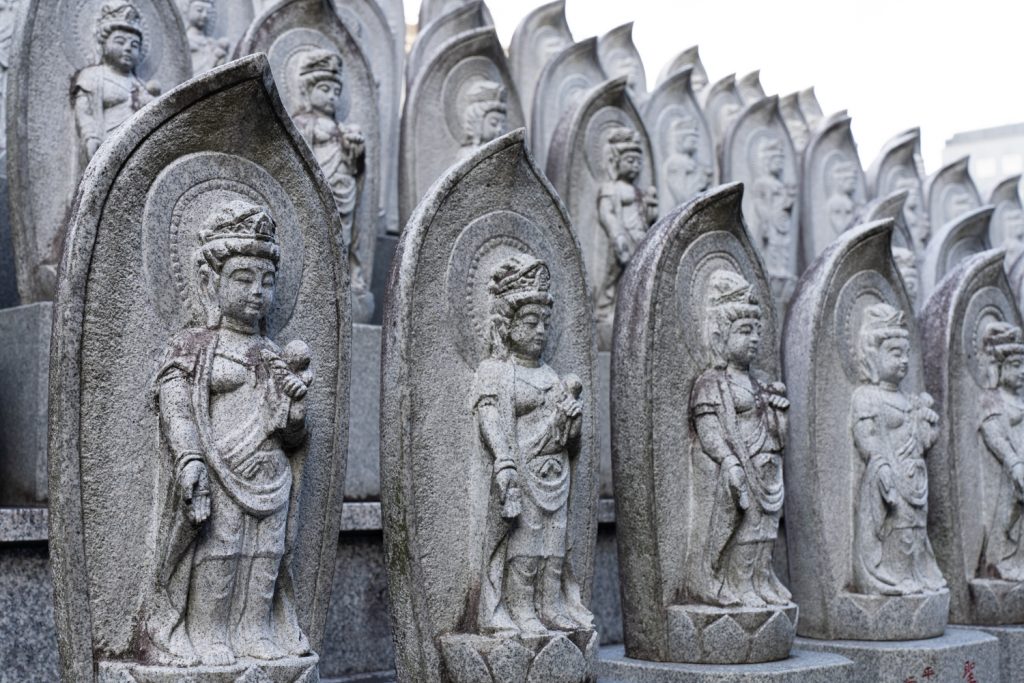
We also offer a variety of Jizo statues and traditional Japanese stone lanterns.
If you’re interested, please feel free to take a look.