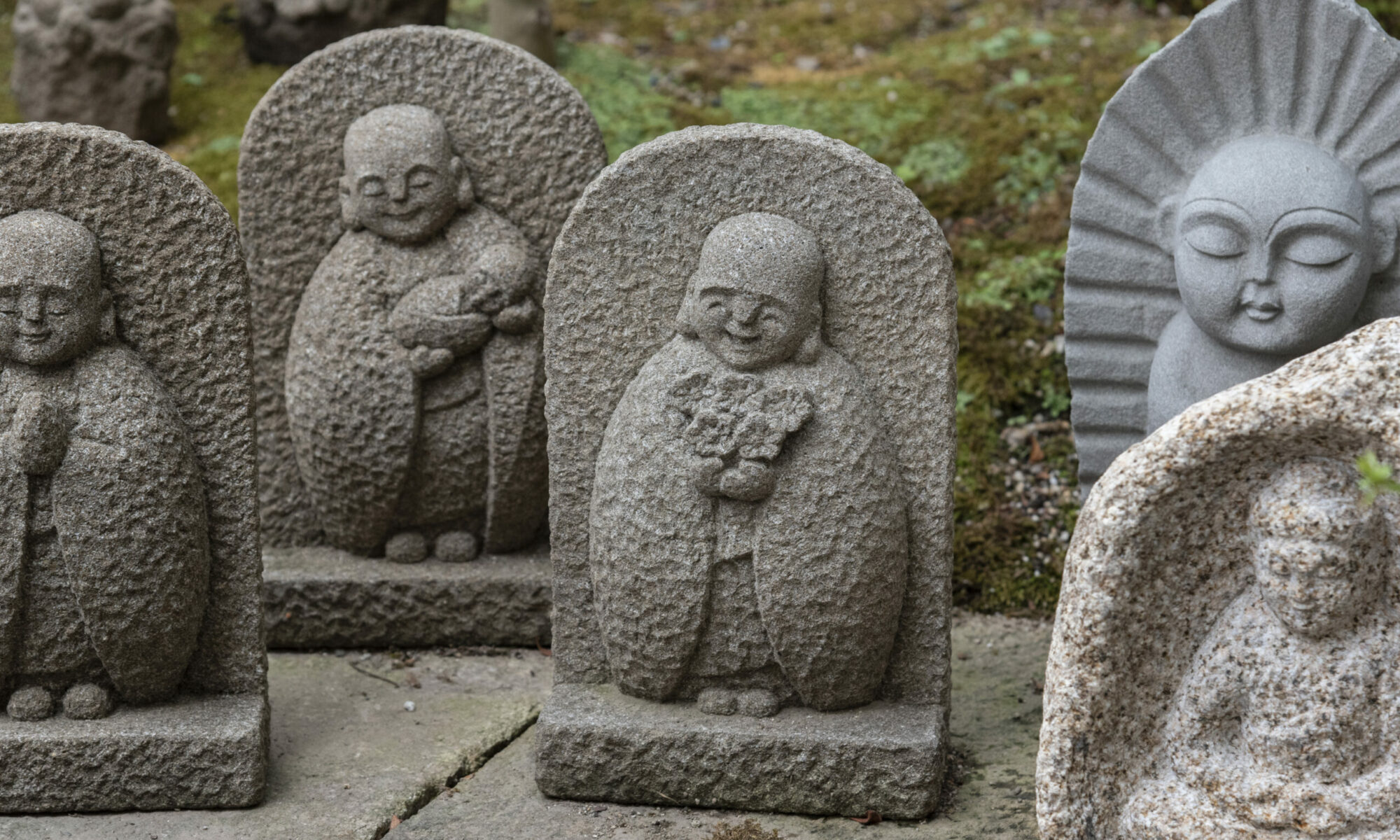

Have you ever heard the word sekibutsu?
They are the stone Buddhas and deities you may casually encounter at shrines, temple grounds, or along roadsides.
Although we often pass by them without much thought, these figures have long been deeply connected to everyday life and spiritual belief in Japan.
This article offers a simple introduction to the world of sekibutsu.

What Is a Sekibutsu(石仏)?
Simply put, a sekibutsu is “a Buddha statue made of stone.”
The word is generally pronounced sekibutsu in Japanese.
Meanwhile, stone representations of Shinto deities are called sekijin.
However, Japan has a long history of shinbutsu shūgō — the blending of Shinto and Buddhism — and because of this cultural background, stone deities are also often broadly referred to as sekibutsu.
From the Asuka period to the present day, sekibutsu have remained close to people’s lives.
They are not merely sculptures.They are objects that carry prayers, hopes, and wishes.
Why Are They Made from Stone?
Why did people choose stone as the material?
Compared with wood or clay, stone is extremely durable and able to withstand long periods of time.Even while exposed to rain and wind, it can remain in the same place for decades or even centuries.
Because of this, sekibutsu came to embody wishes meant to endure over time, such as:
- prayers for the safety of a village
- wishes for a family’s health
- protection for travelers on their journeys
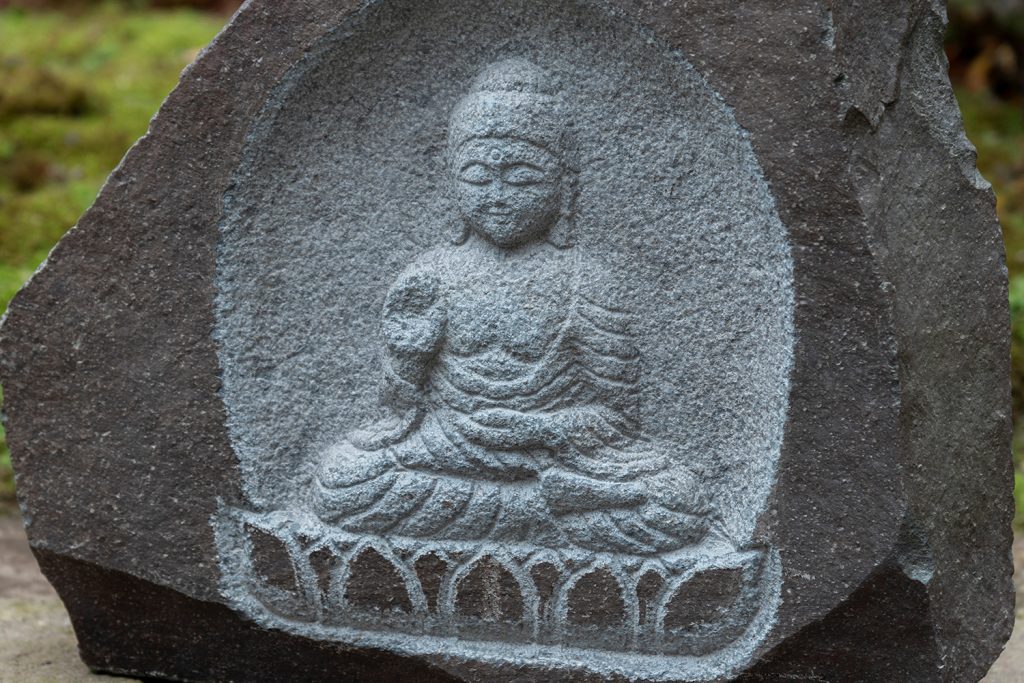
What Sekibutsu Reveal About People’s Wishes
These inscriptions, called hibun(碑文), may record when the statue was made and for what purpose.
Because the daily lives of ordinary people in earlier times were rarely documented in written records, these carved words provide valuable historical clues.
By observing which Buddhas or deities were chosen, we can also imagine the hopes and concerns of the people who lived in that region.
For example, prayers such as:
- wishing for recovery from illness
- hoping children would grow up healthy
- asking for protection from disaster or misfortune
still remain preserved within these stone figures today.
The Difference Between Sekibutsu and Magaibutsu
Sekibutsu can generally be divided into two major forms.
One type is carved from cut stone.
The other is known as magaibutsu (磨崖仏)— Buddhist images carved directly into natural rock surfaces.
Both are objects of worship, but they differ in how they are made and in scale.
Magaibutsu are sometimes carved on large mountain slopes or cliff faces.
We will introduce each type in more detail another time.
Reflections from a Stoneworker’s Perspective
From the perspective of someone who works with stone, sekibutsu are not simply “artworks.”
They are not truly completed when they are newly made.
As they endure wind and rain, their expressions gradually change, and over time they become part of the landscape itself.
In that sense, sekibutsu are not something that is merely “created and finished.”
They are things that continue to accumulate time.
That is how we see them.
Conclusion
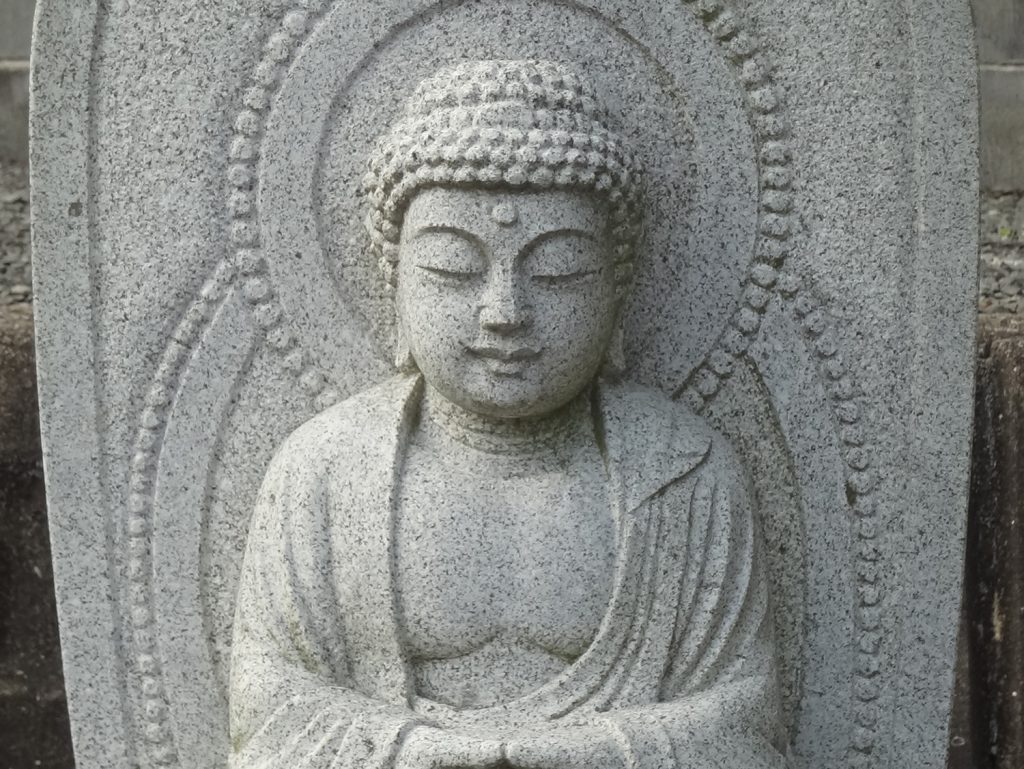
Sekibutsu are stone-carved Buddhas and deities that give form to people’s prayers.
Over long stretches of time, they have continued to exist together with the places and communities around them.
If you happen to come across a sekibutsu along a roadside or at a shrine, try pausing for a moment and wondering:
“What kind of wish was placed here?”
You may begin to see the landscape around you a little differently.
We also offer a variety of Jizo statues and traditional Japanese stone lanterns.
If you’re interested, please feel free to take a look.